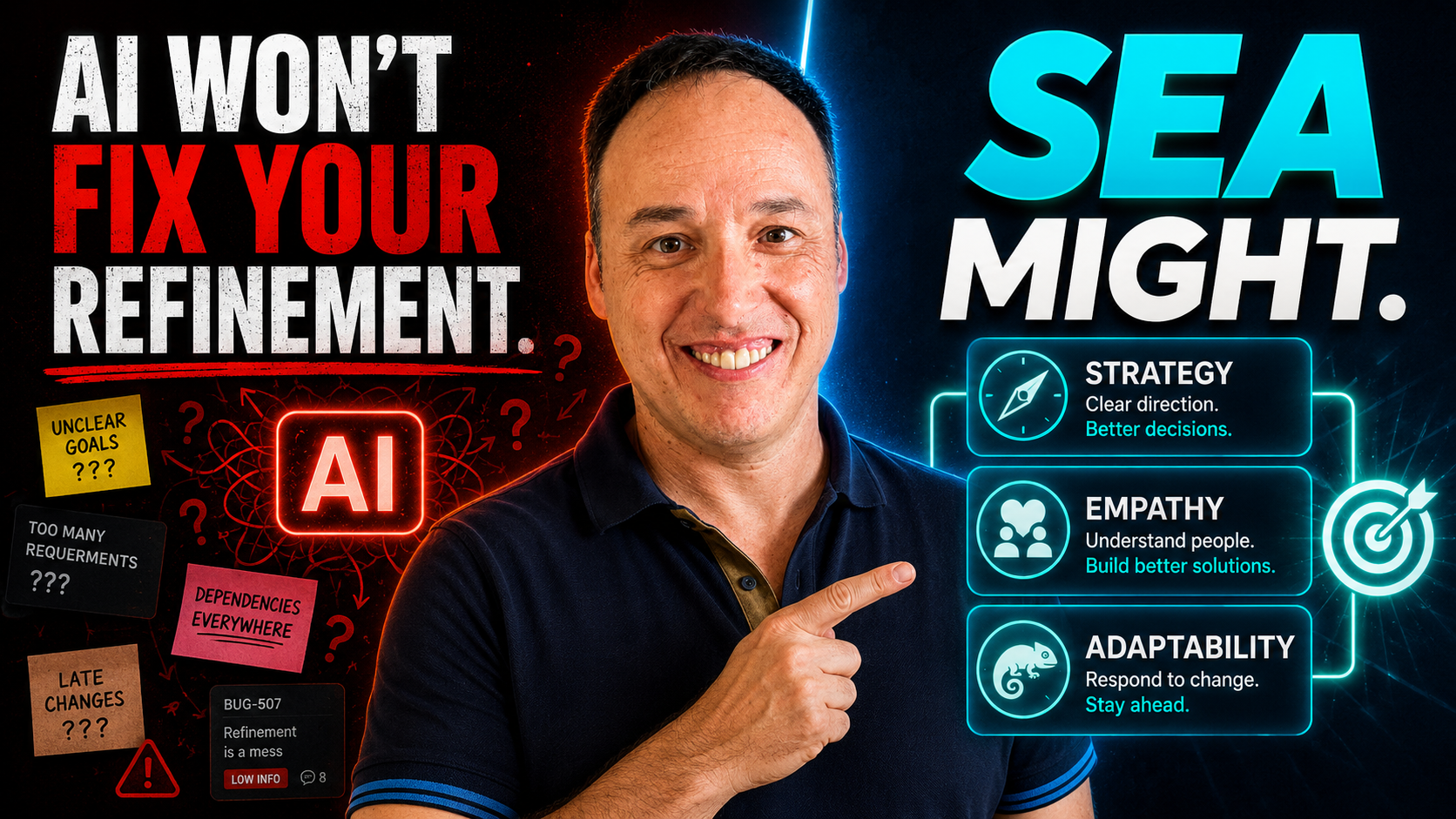
AI Won’t Fix Your Refinement. But It Can Expose How Your Team Thinks.
Most teams do not have a refinement problem because refinement is slow.
They have a refinement problem because refinement has become a ritual.
A ticket enters the meeting. People ask questions. Someone talks about edge cases. Someone asks for an estimate. Someone else silently opens Slack.
At the end, the ticket may look more refined.
But the team is not always wiser.
That is the uncomfortable truth: many refinement sessions are not designed to improve thinking. They are designed to move work through a process.
A checklist is completed. A story gets estimated. A ticket moves closer to the Sprint. Everyone gets the feeling that progress has happened.
But sometimes what has really happened is more administrative than intellectual.
The team has not discovered the value behind the request. It has not uncovered the hidden assumptions. It has not explored the people affected. It has not understood the risks around the work.
It has simply made the ticket look ready.
And this is why AI is both promising and dangerous.
AI can make refinement faster. It can even give an estimate very quickly, taking past stories into account, as if that number were all we needed to call a user story refined.
But if the underlying conversation is weak, AI will not fix it.
It will simply make weak refinement faster.
The real opportunity is different.
AI can expose how the team thinks.
It can reveal missing assumptions, hidden risks, forgotten users, unclear value, and decisions nobody has really made yet.
But only if humans bring the judgment AI does not have by itself.
That judgment, in refinement, comes from three places:
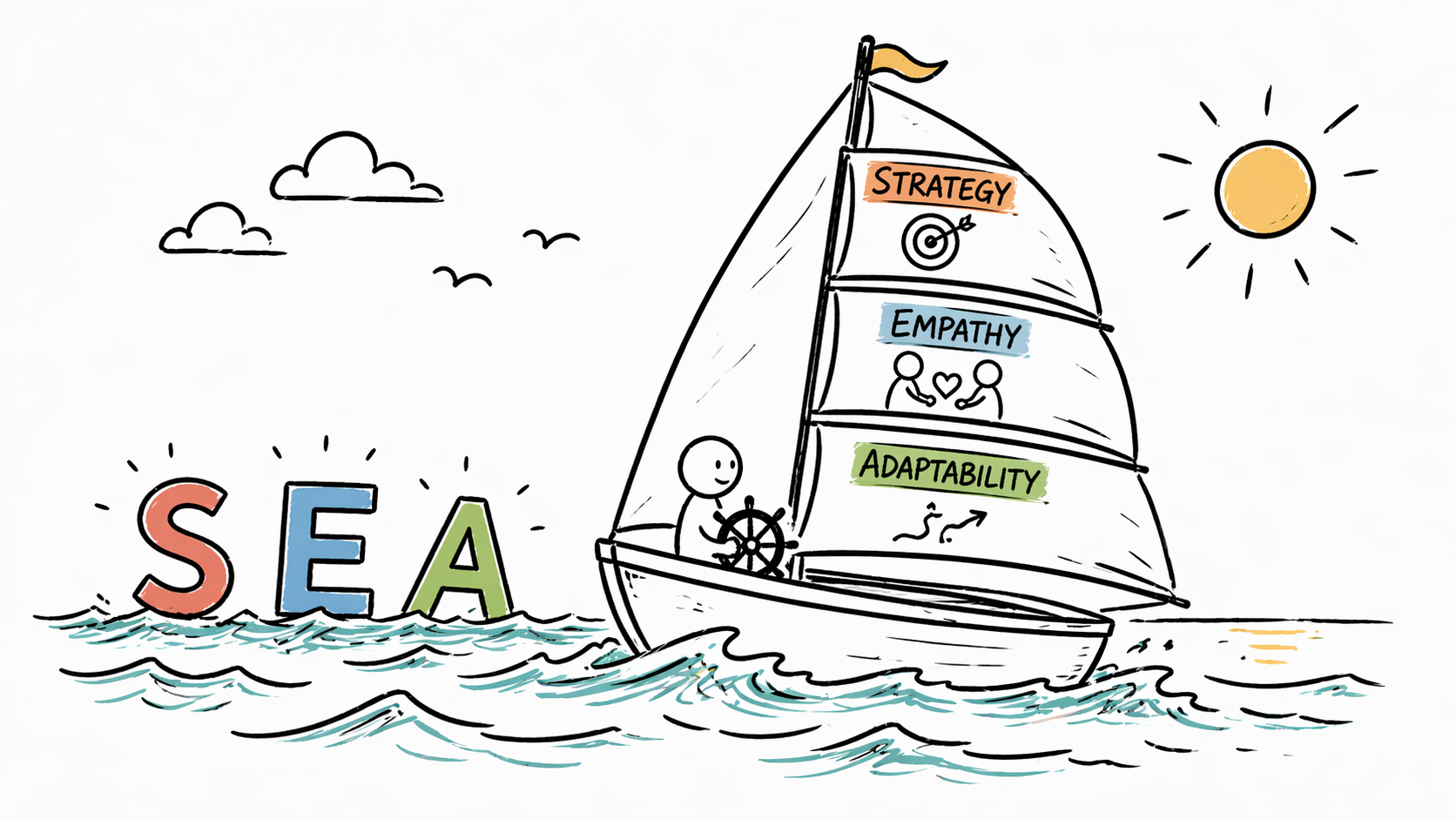
Strategy. Empathy. Adaptability.
I call this SEA.
Not because teams need another framework.
They really do not.
But because useful refinement needs these three human voices in the room: the strategic voice, the user voice, and the context voice.
Without them, AI does not make refinement better.
It just makes bad refinement more efficient.
Refinement Was Never Supposed to Be a Ticket Factory
Backlog refinement is often treated as a preparation activity.
We refine so that stories are ready for Sprint Planning. We clarify requirements. We split work. We add acceptance criteria. We estimate. We reduce uncertainty.
All of that can be useful.
But it can also become a trap.
Because once refinement becomes mainly about making tickets ready, the team can start optimizing for the appearance of readiness instead of the quality of understanding.
A story can have a title, a description, acceptance criteria, dependencies, and an estimate - and still be the wrong thing to build.
A story can be small enough to fit into a Sprint - and still be strategically irrelevant.
A story can be technically clear - and still create pain for users nobody considered.
A story can be perfectly sliced - and still ignore the context that will make it fail.
That is why the real question is not:
Is this story ready?
The better question is:
Are we thinking clearly enough to make a good decision about this story?
This difference matters.
Because refinement is not supposed to be a ticket factory.
It is supposed to be a conversation where uncertainty turns into better decisions.
The Classic Story: “Export to CSV”
Let’s take a very familiar example.
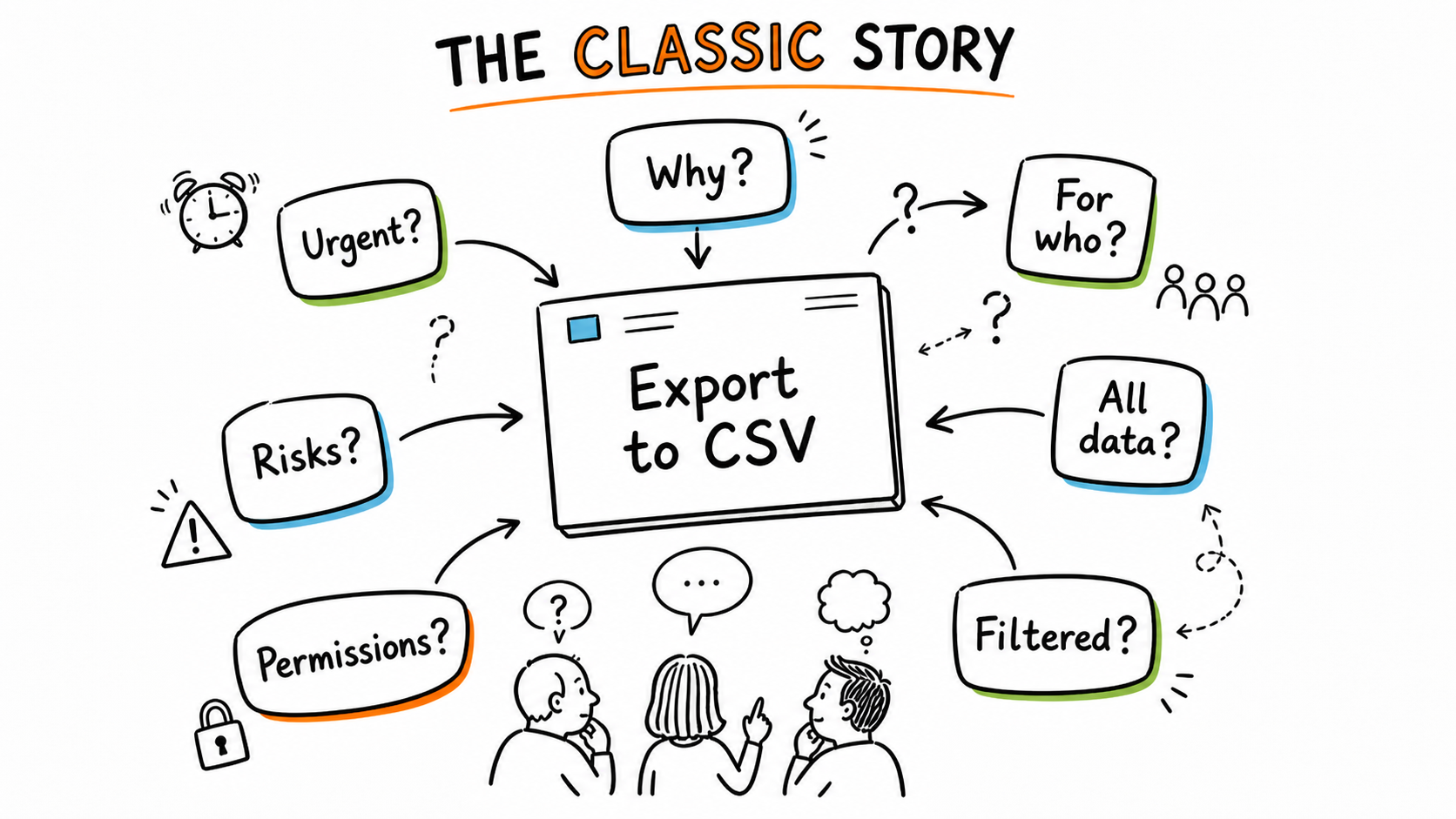
The Product Owner brings a story to refinement:
“We need to export data to CSV.”
At first, this sounds simple.
Almost boring.
A button. A file. Some rows. Some columns.
The kind of story that makes people think, “Can we just estimate this and move on?”
But then the questions begin.
From which screen?
All data or filtered data?
Which columns?
What date format?
Who is allowed to export?
How large can the export be?
What happens if the file takes too long?
Who needs this?
What will they do with the file?
Why CSV?
And slowly, the team realizes something important.
The problem was never just “export to CSV.”
That phrase was only the visible part.
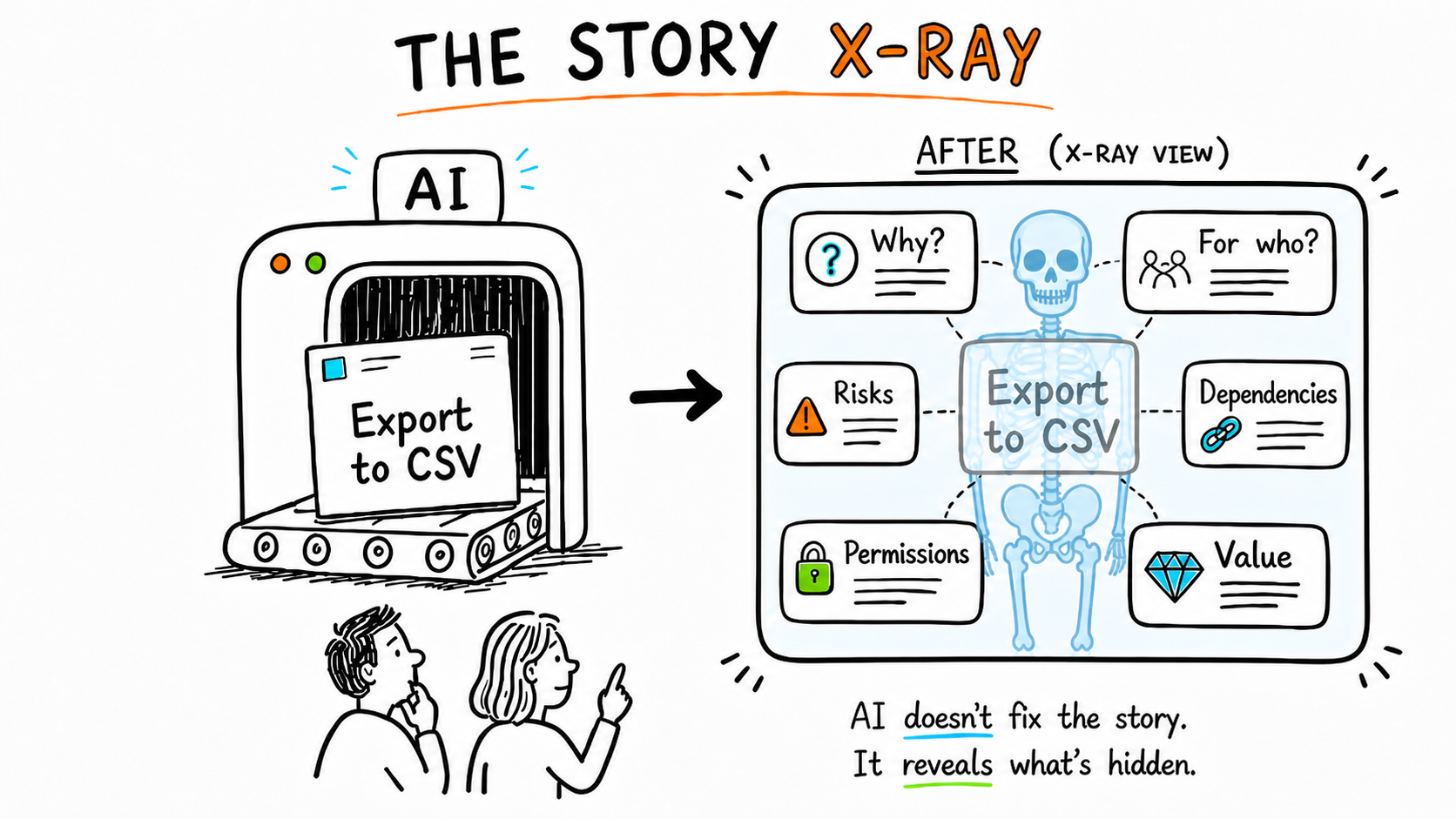
Underneath it there are assumptions about users, value, data, permissions, performance, dependencies, and business decisions.
The story is not unclear because the team is bad at refinement.
The story is unclear because reality is unclear.
This is where many teams get stuck.
They try to solve the uncertainty by writing more details into the ticket.
But adding details is not the same as improving understanding.
Sometimes the team does not need a better ticket.
It needs a better conversation.
What AI Actually Changes
Now imagine bringing AI into this refinement conversation.
Not to replace the Product Owner.
Not to write all the stories.
Not to become the new authority in the room.
Just to help the team ask better questions.
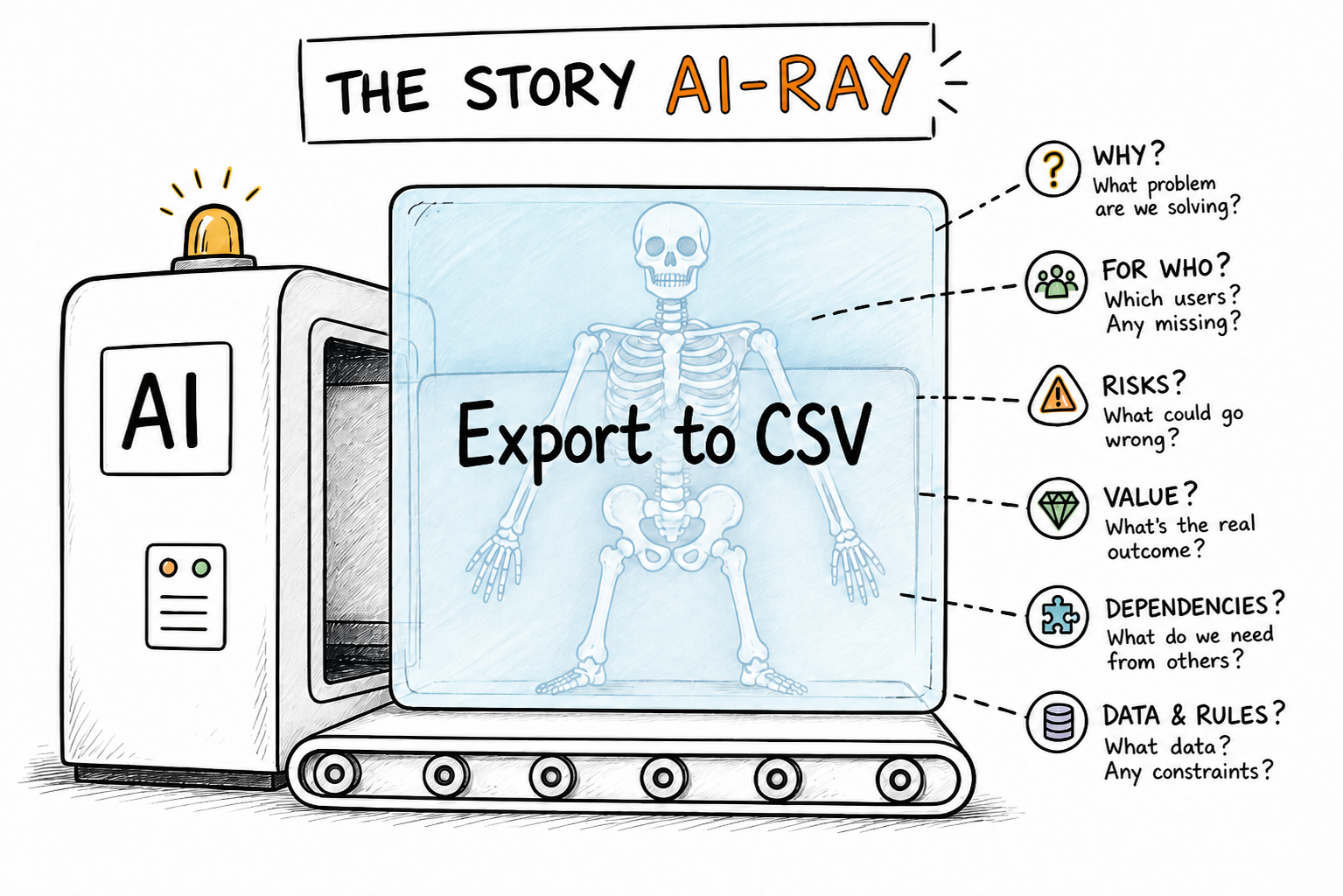
You give AI the story:
“As a user, I want to export data to CSV so that I can analyze it elsewhere.”
And AI can immediately respond with questions like:
- Who exactly is the user?
- What data do they need?
- What decision will they make with the export?
- Should this be CSV, or would another solution work better?
- What permissions are required?
- What happens with large datasets?
- What does success look like?
- Who else is affected by this feature?
- What risks are we ignoring?
This is useful.
But it is also uncomfortable.
Because AI is not necessarily making refinement better yet.
It is making the weakness of the refinement visible.
If the team already has a healthy product conversation, AI can amplify it.
If the team is curious, AI can help generate angles they might have missed.
If the team is disciplined, AI can help compare options faster.
But if refinement is just a bureaucratic ritual, AI will expose that too.
Because now the questions are there.
The gaps are there.
The assumptions are there.
The weak thinking is harder to hide.
That is the real value of AI in refinement.
Not that it gives the answer.
But that it makes the conversation harder to avoid.
AI is not a replacement for product judgment.
It is an amplifier of the quality of the questions we are willing to ask.
SEA: Three Human Voices AI Still Needs
AI can expand the conversation.
But expansion is not enough.
More questions do not automatically create better thinking.
More options do not automatically create better decisions.
More information does not automatically create more clarity.
In fact, without judgment, AI can easily overwhelm the team.
It can produce ten possible risks, five alternative solutions, eight user personas, twelve acceptance criteria, and a beautifully structured list of story slices.
And still the team may not know what to do.
That is where SEA becomes useful.
Strategy asks:
Is this worth doing?
Empathy asks:
For whom, and who else is affected?
Adaptability asks:
What context could change the answer?
AI expands the conversation.
SEA gives the conversation direction and meaning.
It helps the team decide what matters.
And that is where humans still create value.
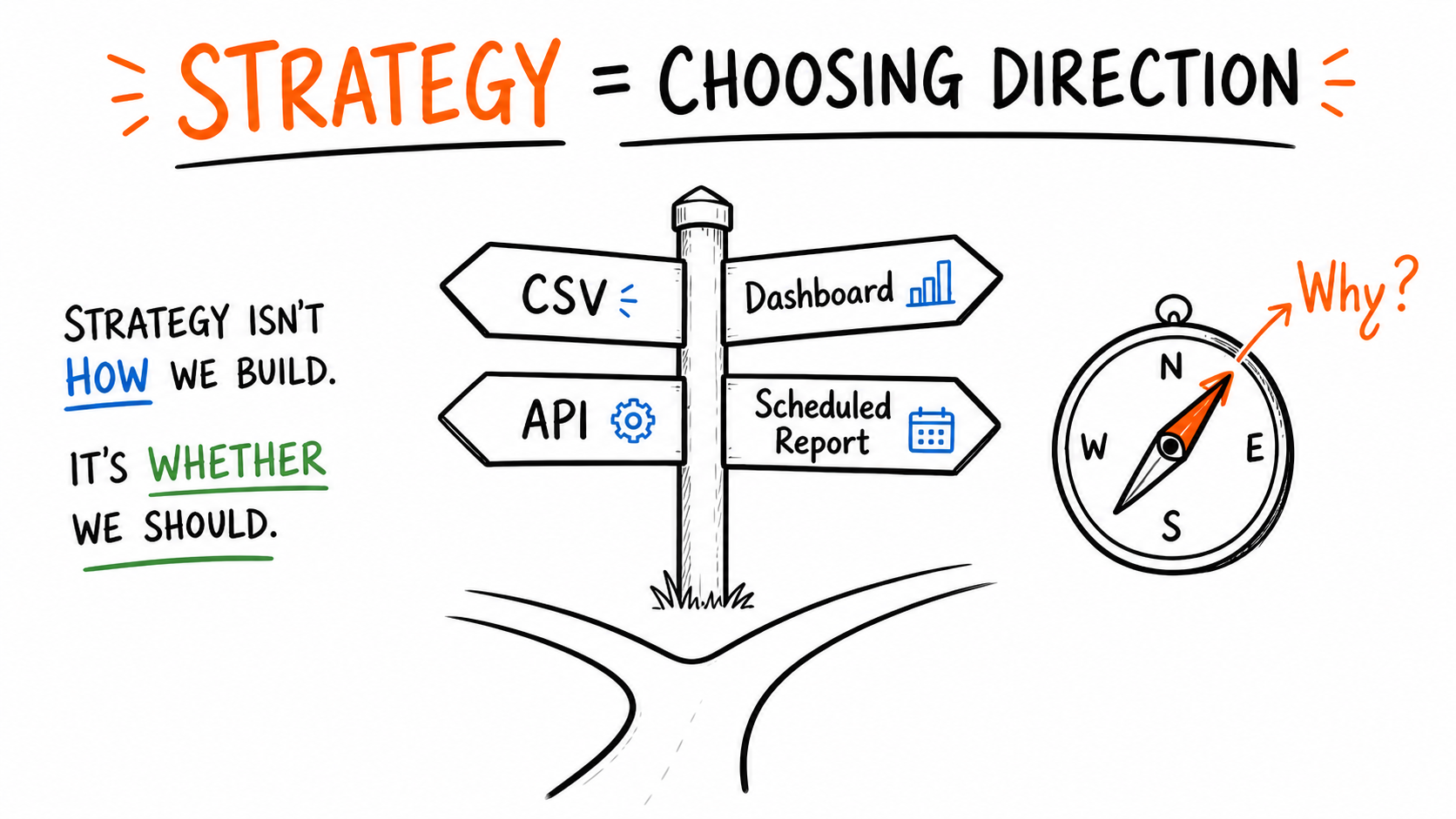
Strategy: Don’t Just Ask How to Build It
Strategy is the voice that asks:
Why are we doing this at all?
This is often the most uncomfortable question in refinement.
Especially when the story arrives as if the decision has already been made.
“We need export to CSV.”
The implicit message is:
Please estimate this.
But strategy changes the conversation.
Instead of asking only:
How do we build it?
A strategic team asks:
Should we build it?
That question can feel annoying.
It can feel like resistance.
It can feel like someone is slowing things down.
But often it is the most valuable question in the room.
Because maybe the user does not need CSV.
Maybe they need a dashboard.
Maybe they need an API.
Maybe they need a scheduled report.
Maybe they need an alert.
Maybe they need a better search.
Maybe they need nothing new, because the data already exists somewhere else.
AI can help here.
You can ask:
“Why might a user ask for CSV export? List the possible underlying needs and alternative solutions.”
And AI might suggest:
- analyzing data in Excel
- sharing reports with another department
- importing data into another tool
- creating audit evidence
- keeping an offline backup
- combining this data with another source
Now the team is no longer talking about a button.
The team is talking about a need.
That distinction matters.
A button is a solution.
A need is a reason.
And if the reason is unclear, the solution is fragile.
This is where refinement becomes valuable: not when the team makes the ticket prettier, but when it challenges the value behind the ticket.
Strategy is uncomfortable because it can kill ideas.
But that is exactly why it is useful.
Without strategy, AI helps you build the wrong thing faster.
Slicing with SPIDR: Smaller Is Not Always Clearer
At some point in refinement, someone usually says:
“This story is too big.”
And very often, they are right.
So the team tries to split it.
With AI, this becomes incredibly easy.
Ask AI:
“Split this story into smaller stories.”
And it will do it.
Immediately.
Confidently.
Beautifully.
But there is a problem.
AI can split work very quickly.
That does not mean the split is useful.
Because smaller stories are not automatically better stories.
Sometimes they are just smaller pieces of confusion.
You start with one vague story:
“Export to CSV.”
And you end up with five vague stories:
“Export basic data.” “Export advanced data.” “Export filtered data.” “Export admin data.” “Export all data.”
Congratulations.
You now have five problems instead of one.
This is why structure matters.
One useful structure is SPIDR, from Mike Cohn:
- Spike - reduce uncertainty
- Path - focus on one user journey
- Interface - isolate one interaction or screen
- Data - limit the data scope
- Rules - separate permissions, validations, or business logic
These are not just slicing techniques.
They are different ways of thinking about the problem.
So instead of asking AI:
“Split this story.”
Ask:
“Split this story using SPIDR. For each possible slice, explain what we would learn, what risk it reduces, and when it would be a good first slice.”
Now the answer becomes more useful.
A Spike might be:
Investigate performance risks when exporting large datasets.
A Path might be:
Allow users to export the current filtered list.
An Interface slice might be:
Add the export button to the reporting page.
A Data slice might be:
Export only the basic fields first.
A Rules slice might be:
Apply permission rules so users only export data they are allowed to see.
Now the team is not just cutting the story into pieces.
It is learning about the shape of the problem.
AI gives speed.
SPIDR gives structure.
The team gives judgment.
Without judgment, you do not reduce the mess.
You just slice it thinner.
Empathy: There Is No “The User”
The second voice is Empathy.
The user’s voice.
Which is funny, because in many refinement sessions, the user is the only person who is not invited.
We talk about the user.
We imagine the user.
We defend the user.
Sometimes we even become the user.
Which is impressive, because apparently everyone in the room is now a developer, a tester, a Product Owner, and a finance analyst called Susan who exports reports every Friday.
But real empathy is harder than that.
Ask AI:
“Act as a first-time user who does not know what CSV is. What would confuse you about this feature?”
Suddenly, the simple export feature does not look so simple.
Where does the file go?
What can I open it with?
Why does Excel break some characters?
What happens after I click export?
Why are there columns I do not understand?
This is useful.
AI can help us simulate perspectives we usually forget.
But there is a trap.
Empathy is not just about understanding one user.
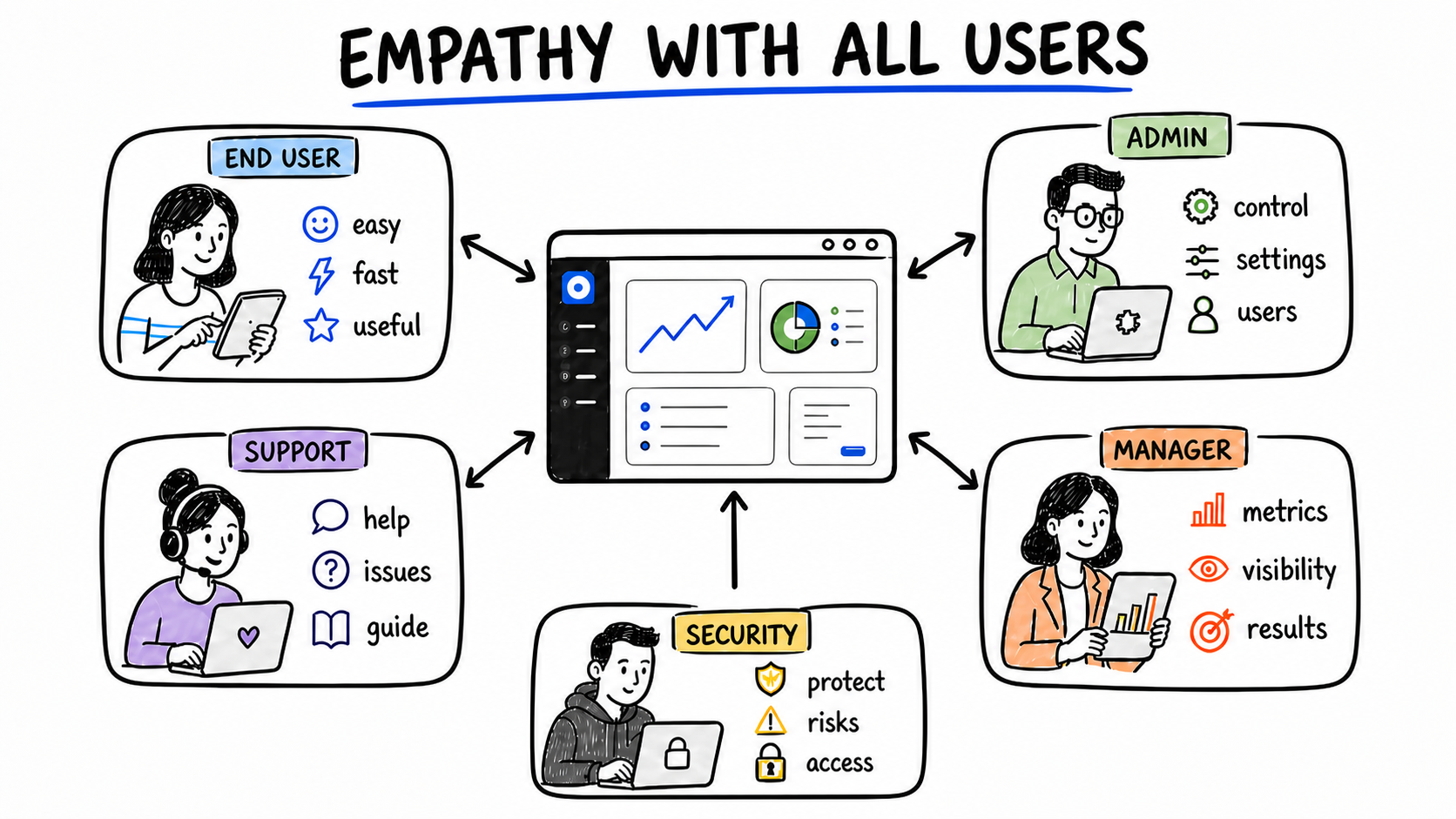
It is about understanding the ecosystem of people affected by the product.
There is rarely only “the user.”
There may be:
- the end user who clicks export
- the admin who controls permissions
- the support person who receives questions when files break
- the manager who needs visibility
- the security team responsible for data exposure
- the person in another department who receives the CSV
- the team that maintains the data model
Each of them sees a different part of the system.
Each of them may care about something different.
And each of them may be affected by a decision that looks small from inside the ticket.
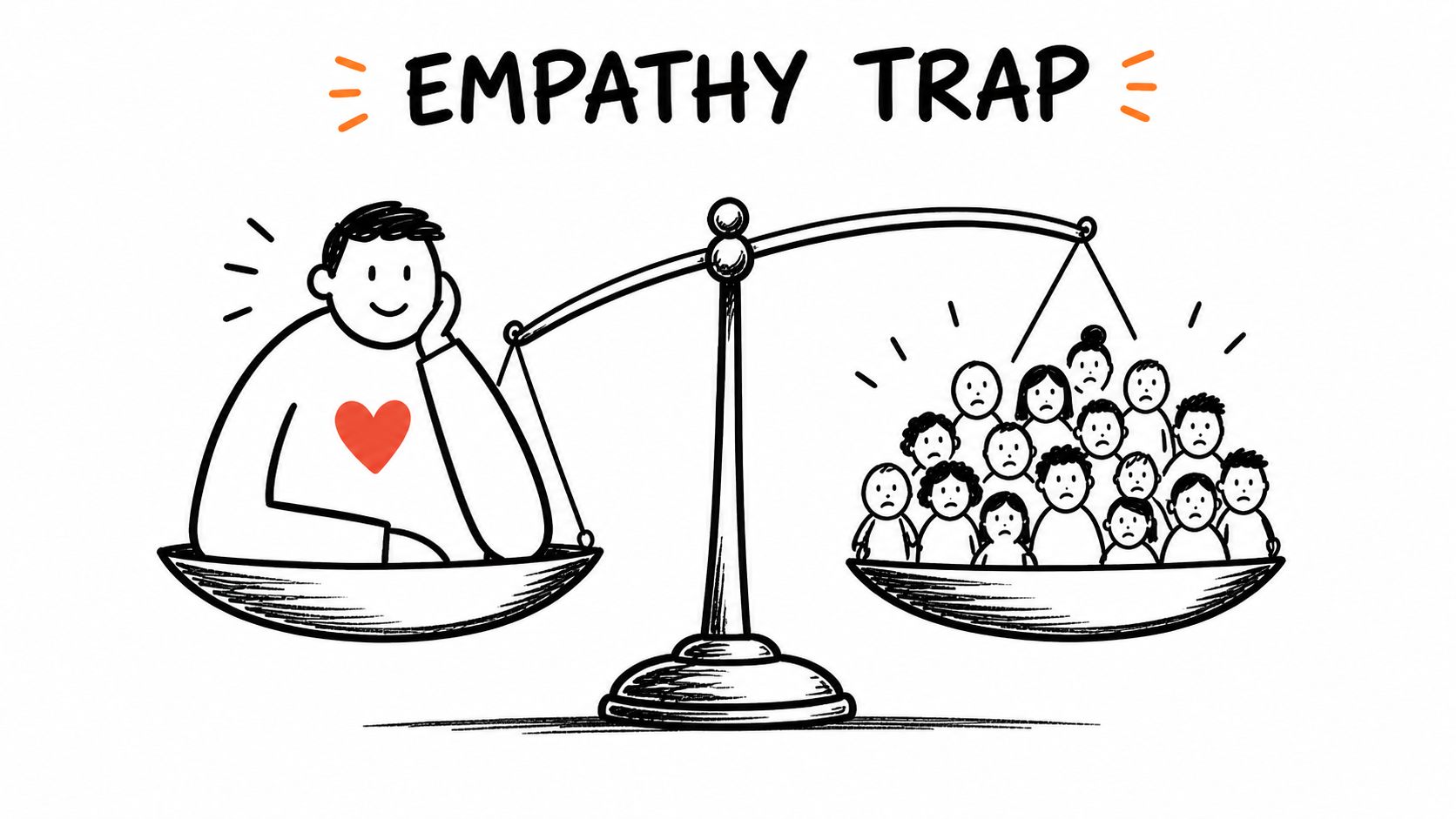
Empathy Trap
This is where the empathy trap appears.
The empathy trap happens when one user becomes the whole system.
I once saw this in a team where I was working as Scrum Master.
We invited a real user into refinement: a data-entry clerk who used the product every day.
It was a great decision.
The team saw real pain.
Too many fields.
Confusing steps.
Repetitive clicks.
Tiny inefficiencies repeated hundreds of times.
The pain was real.
So the team optimized the product around that pain.
And it worked.
For the clerk.
But then the problems started.
Managers lost visibility.
Support had more exceptions.
Other users did not understand the new flow.
The system became easier for one person and harder for the ecosystem around that person.
The problem was not listening to the user.
Listening to users is good.
The problem was treating one voice as if it represented the whole system.
That is the empathy trap.
Too little empathy, and you build something nobody wants.
Too much empathy in one direction, and you create a blind spot.
AI can help the team zoom out.
Ask:
“Who else is affected by this feature, directly or indirectly?”
Then ask:
“What would each stakeholder care about, fear, or need from this change?”
Now the conversation becomes richer.
But again, AI does not decide for the team.
The team still has to judge whose needs matter most in this decision.
Sometimes the end user matters most.
Sometimes security does.
Sometimes support does.
Sometimes the business constraint changes everything.
The goal is not to make everyone equally happy.
The goal is to make the trade-off visible.
Empathy is not about making one user happy.
It is about understanding the people around the product.
Without empathy, AI gives technically correct solutions to human problems it does not fully understand.
Adaptability: Refinement as Context Discovery
The third voice is Adaptability.
And adaptability is often misunderstood.
Teams love saying they are adaptable because priorities change every two days.
But that is not adaptability.
That is turbulence with a Jira board.
Real adaptability is not just reacting fast.
Real adaptability is reading the context before committing to a decision.
It asks:
What happened last time?
What changed?
What constraints exist now?
What risks are we pretending not to see?
What do we already know, but keep forgetting?
Go back to the CSV export.
Ask AI:
“The last time we built a data export feature, what could have gone wrong?”
Or better, if AI has access to your product history, documentation, support tickets, or previous incidents:
“Based on what we know from previous export features, what risks should we consider before refining this story?”
Maybe the answer reminds you that large exports caused performance issues.
Maybe users exported sensitive data.
Maybe the CSV format was inconsistent.
Maybe support received questions about broken files.
Maybe another team already built something similar.
That last one hurts.
Because sometimes the most valuable refinement question is:
“Have we already solved this?”
Maybe there is already an API.
Maybe there is an old report nobody remembers.
Maybe another team created a workaround.
Maybe the data is available somewhere else.
Maybe the solution is not elegant, but good enough.
This is context.
And context changes decisions.
Now add more reality.
Dependencies.
Legacy code.
Security reviews.
Data permissions.
Release windows.
Different teams.
Different time zones.
Different priorities.
Suddenly, the simple story is no longer just a ticket.
It is coordination.
It is risk.
It is product history.
It is organizational memory.
This is where AI can be extremely useful.
Not by deciding what to do.
But by helping the team ask:
“What are we missing?”
A good refinement prompt could be:
“Given this story, list the contextual risks we may be ignoring: dependencies, previous attempts, security constraints, data ownership, operational impact, support implications, and release constraints.”
This kind of question changes refinement.
It moves the team beyond clarification.
It turns refinement into risk discovery.
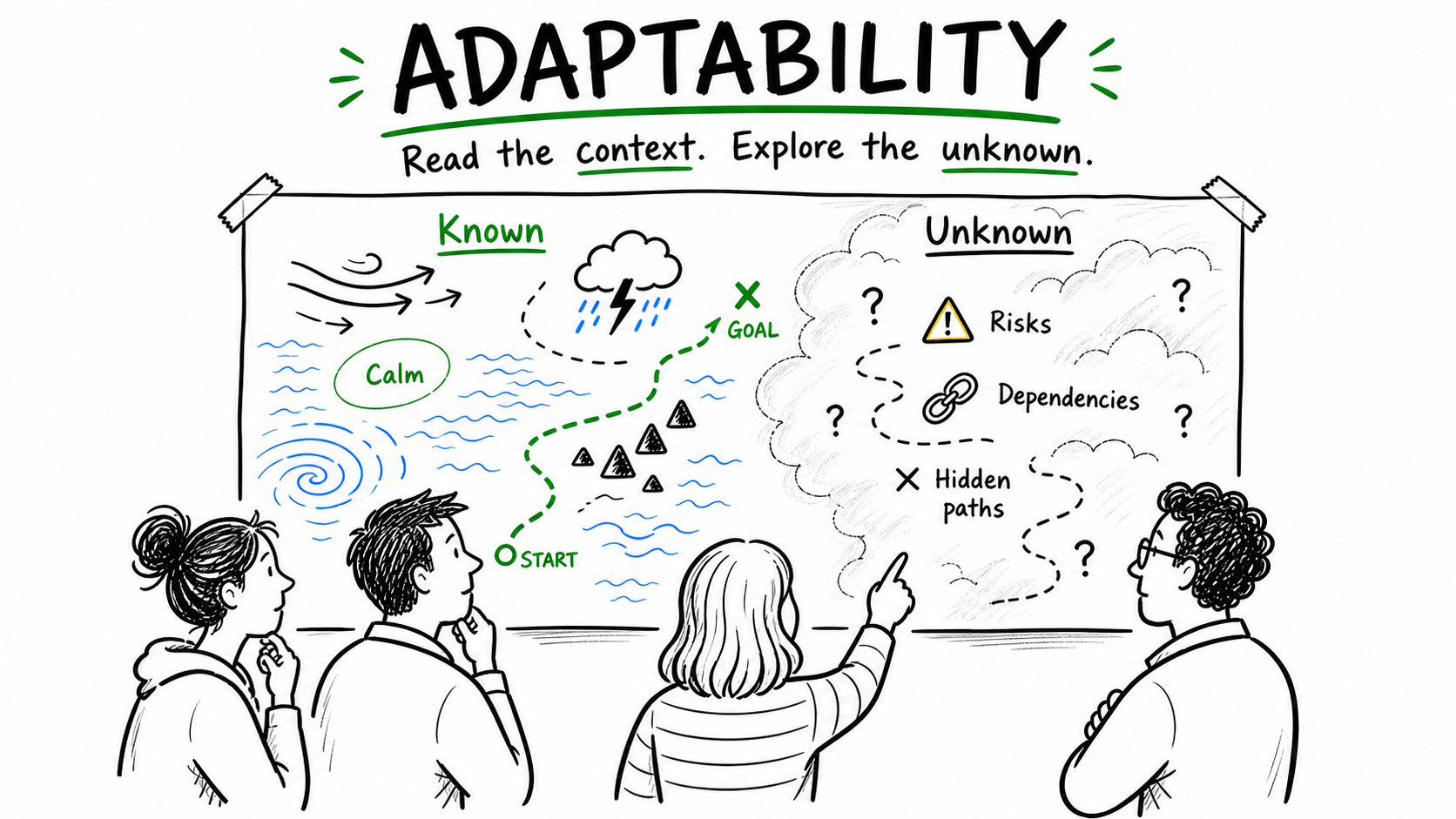
And that matters because many stories do not fail because teams could not code them.
They fail because teams ignored the world around them.
Without adaptability, AI helps you repeat old mistakes faster.
The New Role of Humans in AI-Assisted Refinement
There is a tempting mistake teams can make with AI.
They can start treating it as the new smartest person in the room.
The one who always has an answer.
The one who always produces a clean structure.
The one who never gets tired, never complains, and never says, “Can we move on?”
But refinement does not improve when the team simply accepts AI output.
That is not better refinement.
That is outsourced judgment.
AI can generate options.
AI can reveal risks.
AI can suggest slices.
AI can simulate users.
AI can challenge assumptions.
But humans still have to decide.
What matters?
What matters now?
What matters most?
That is the work.
And that work cannot be delegated to a model.
Because product decisions are not just information problems.
They are trade-off problems.
Strategy without empathy can become cold.
You build the right thing for the wrong people.
Empathy without balance can become naive.
You make one user happy and create pain for everyone else.
Adaptability without strategy can become chaos.
You react to everything and commit to nothing.
None of these voices is always right.
That is why the team matters.
The value is not in blindly following Strategy, Empathy, or Adaptability.
The value is in the tension between them.
AI can make that tension visible.
But the team has to work with it.
The danger is not only that AI gives bad answers.
The bigger danger is that AI gives plausible answers too quickly, and the team stops thinking.
That is why AI should not close the conversation.
It should open it.
From Better Prompts to Better Conversations
A lot of teams start with the wrong question:
“How can we use AI to write better user stories?”
That is not a bad question.
But it is too small.
A better question is:
“How can we use AI to have better product conversations?”
That shift matters.
Because the goal is not to generate perfect tickets.
The goal is to improve the quality of the thinking before the team commits to work.
Here are a few prompts that can help.
Strategy prompts
“What problem might this story be trying to solve? List possible underlying needs.”
“Suggest alternative solutions to this request, including non-feature options.”
“What evidence would help us decide whether this is worth building?”
“What would make this story strategically irrelevant?”
Empathy prompts
“Who is directly and indirectly affected by this feature?”
“Act as a first-time user. What would confuse you?”
“Act as support. What questions or incidents might this create?”
“Act as security. What risks should we consider?”
“Which stakeholder might be harmed if we optimize only for the primary user?”
Adaptability prompts
“What dependencies could affect this story?”
“What risks are easy to underestimate here?”
“What previous product decisions or existing features might change the best solution?”
“What assumptions should we validate before implementation?”
“What could make this story fail even if the code is delivered successfully?”
These prompts are useful not because AI has perfect judgment.
They are useful because they help the team slow down in the right places.
Not everywhere.
Not forever.
Just where better thinking matters.
AI Won’t Save Your Refinement
So no, AI will not fix your refinement.
If refinement is a bureaucratic meeting, AI will make it a faster bureaucratic meeting.
If refinement is ticket polishing, AI will help polish tickets faster.
If refinement is an estimation ritual, AI will help automate the ritual.
But if refinement is a conversation where the team turns uncertainty into better decisions, AI can make that conversation richer.
It can show more options.
It can reveal more risks.
It can simulate more perspectives.
It can challenge more assumptions.
But the team still has to think.
The team still has to choose.
The team still has to judge.
That is where Strategy, Empathy, and Adaptability matter.
Strategy asks:
Is this worth doing?
Empathy asks:
Who is affected?
Adaptability asks:
What context could change the answer?
And together, they help prevent AI from becoming just another machine for producing tickets.
Because refinement was never supposed to be a ticket factory.
It was supposed to be a place where uncertainty turns into better decisions.
So the next time someone says:
“We need export to CSV.”
Do not just ask:
“How big is it?”
Ask:
“Why does this matter?” “Who does this affect?” “What are we missing?”
And maybe, just maybe, the team will finally agree on what “export to CSV” actually means.
Because AI will not save your refinement.
But it might save you from pretending it was working.
You can find the worksheet on the Resources page.
If you’d like the full explanation of the ideas in this post, watch the video here.