The Ikigai of Any Role in the Age of AI
AI is changing more than how we work. It is reshaping the very tasks, skills, and outputs that have long defined our professional identity. That creates an important question: if AI can do more of what we used to do, what is left of our Ikigai?
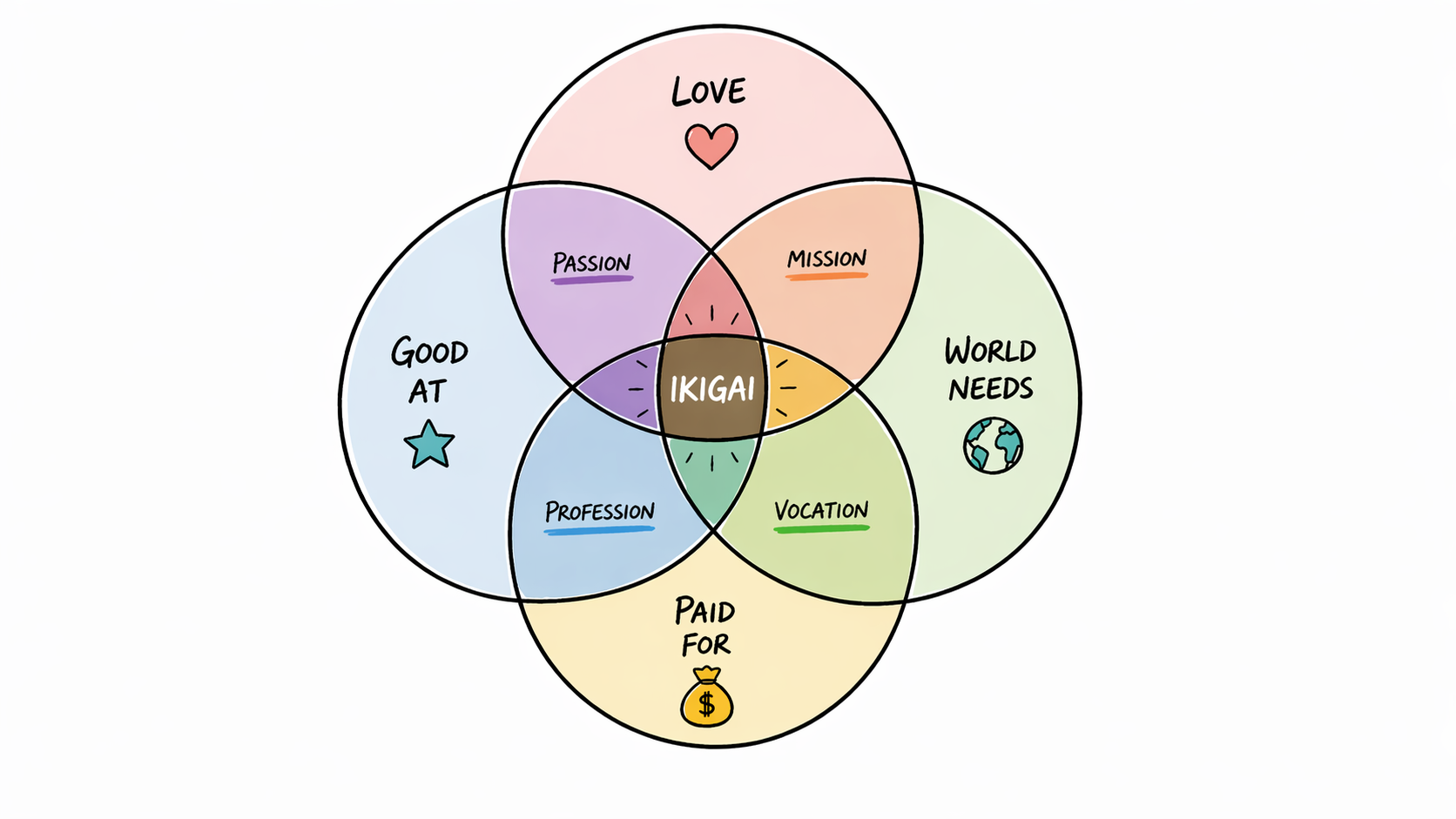
Ikigai is a Japanese concept often translated as “reason for being.” Traditionally, it sits at the intersection of four elements: what you love, what you are good at, what the world needs, and what you can be paid for.
In the age of AI, those four circles are changing. Not disappearing, but shifting. And that means we need a new way to interpret them.
That is where the SEA Framework comes in.
What Is the SEA Framework?
SEA stands for Strategy, Empathy, and Adaptability. These are not just useful soft skills. In an AI-driven world, they are becoming the core of human value.
- Strategy helps you choose what really matters.
- Empathy helps you understand people, context, and hidden needs.
- Adaptability helps you keep learning as tools and expectations keep changing.
Together, they offer a practical way to redefine your Ikigai.
How AI Changes Ikigai
AI is increasingly taking ownership of tasks that used to define professional roles: writing, summarizing, generating ideas, producing documentation, even creating first drafts of workshops or visual assets.
That does not mean humans become less relevant. It means the value shifts.
Instead of being paid mainly for producing outputs, we are increasingly valued for making better decisions, guiding change, and creating meaningful outcomes.
So the question is no longer, “Can I do this task better than AI?”
The real question is, “What human value do I bring now?”
Shu Ha Ri and Continuous Reinvention
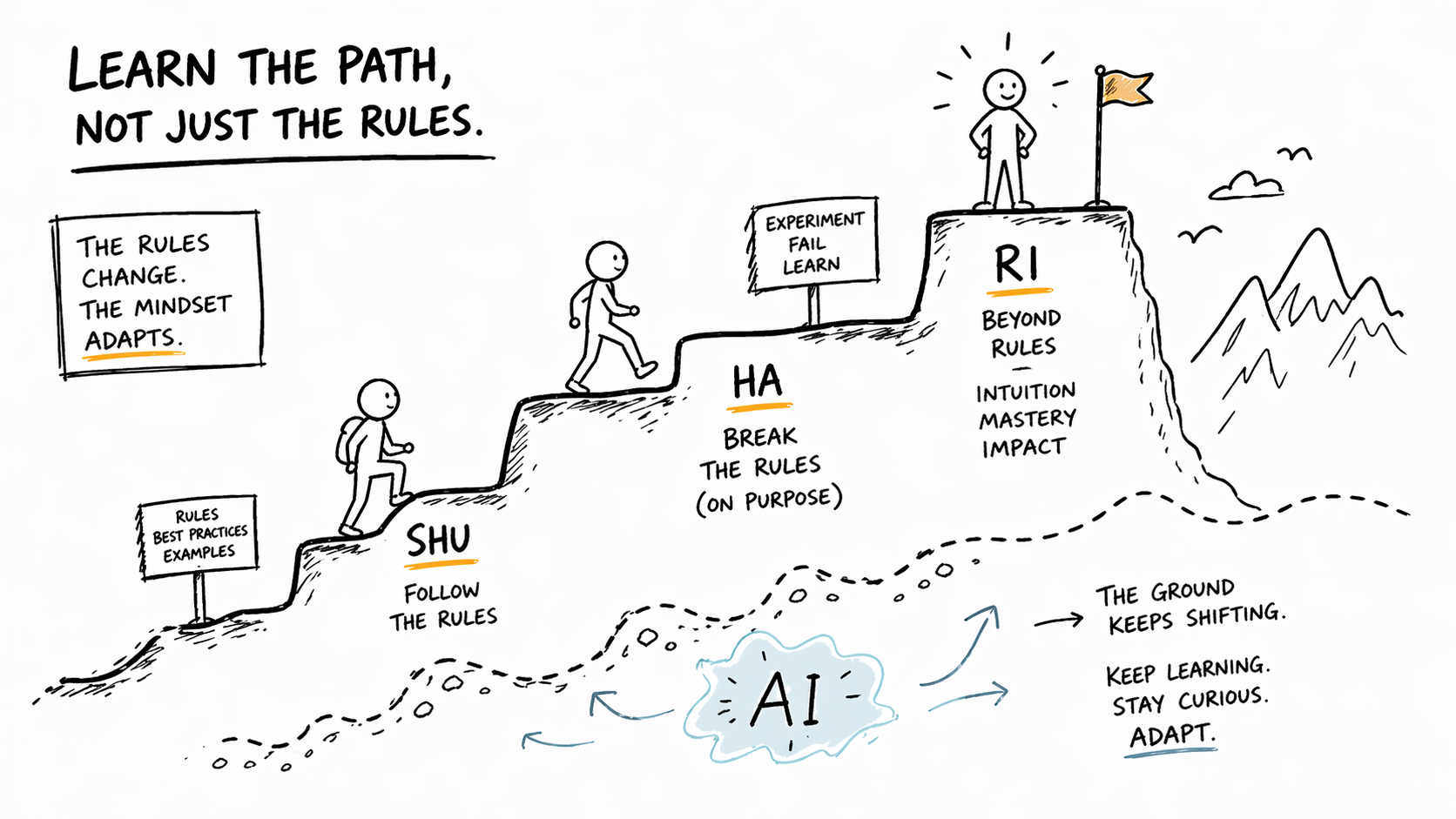
To understand this shift, the Shu Ha Ri model is very useful.
- Shu means following the rules.
- Ha means breaking and adapting the rules.
- Ri means transcending the rules.
Traditionally, this was seen as a learning journey. But with AI, the path is less linear. Tools evolve so fast that we are often forced back into Shu, learning new systems, new prompts, and new workflows again and again.
At the same time, we also need Ri: the ability to judge quality, relevance, and fit. AI can generate plenty of options. Human judgment is what decides which one is worth using.
That is why adaptability is so critical. In the AI era, being good at something is not about mastering one static process. It is about continuously learning, evaluating, and adjusting.
Reframing the Four Ikigai Circles with SEA
Here is how the SEA lens helps redefine each part of Ikigai:
What you love
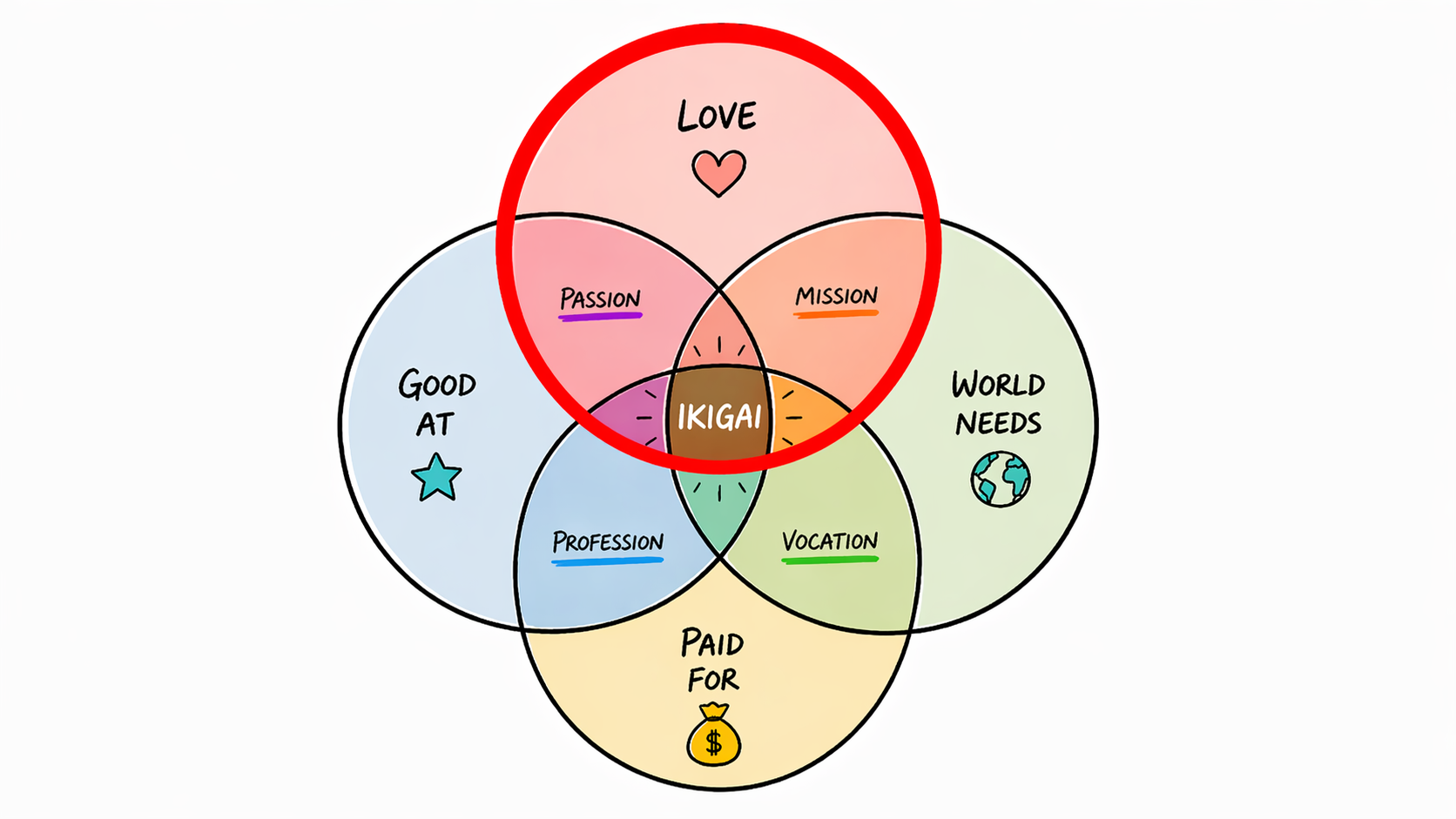
What you love is often the most stable part of your Ikigai, even when everything around it changes. AI may transform the tools you use, the speed at which you work, and the way ideas are generated, but it does not erase the things that genuinely give you energy. If you are a facilitator, coach, or Scrum Master, you may still love helping people grow, seeing teams improve, and creating spaces where trust can emerge. That kind of motivation is deeply human, and it still matters.
This is important because purpose does not come only from execution. It also comes from the emotional connection you have with the work itself, the moments that make you feel useful, and the impact you enjoy creating. AI can support the process, but it does not replace the sense of meaning that comes from caring about people and outcomes. In that sense, what you love remains a strong anchor while the rest of your professional landscape evolves.
What you are good at
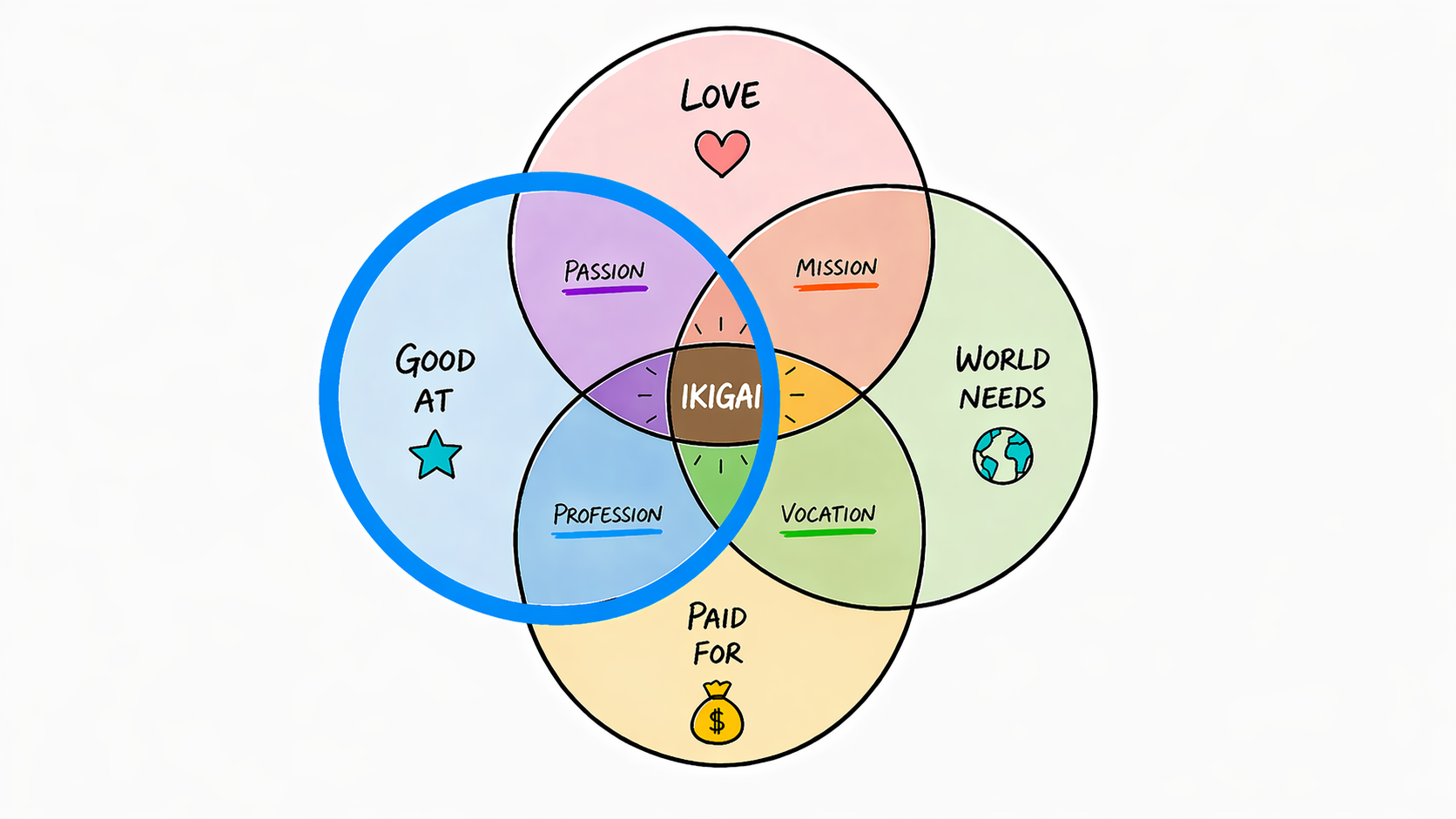
What you are good at is where the shift becomes more visible. AI can accelerate the how, draft the first version, and reduce the time needed to get to something usable. But the value of a human professional is no longer defined only by how much they can produce. It is defined by the quality of the judgment they bring to the work.
The Shu Ha Ri model helps explain this well. In the past, learning often felt linear: first you followed the rules, then you adapted them, and finally you mastered them. With AI, that path is no longer so clear. The tools evolve so fast that we are permanently in Shu, because we never stop learning new things. We are always adapting to new interfaces, new workflows, and new ways of working.
At the same time, we are also in Ri. AI can generate useful material, but it still needs supervision from a human with enough criteria to judge quality, relevance, and context. Someone has to decide whether the output is truly fit for purpose, and that responsibility cannot be delegated to the machine. That mix of continuous learning and careful judgment is now part of the craft.
That means your craft is evolving, not disappearing. Reading the room, understanding the real problem, and deciding what matters most are becoming even more important. AI can generate options, but it cannot fully replace the ability to sense context and choose wisely. In that sense, your skill is moving from execution toward discernment.
What the world needs
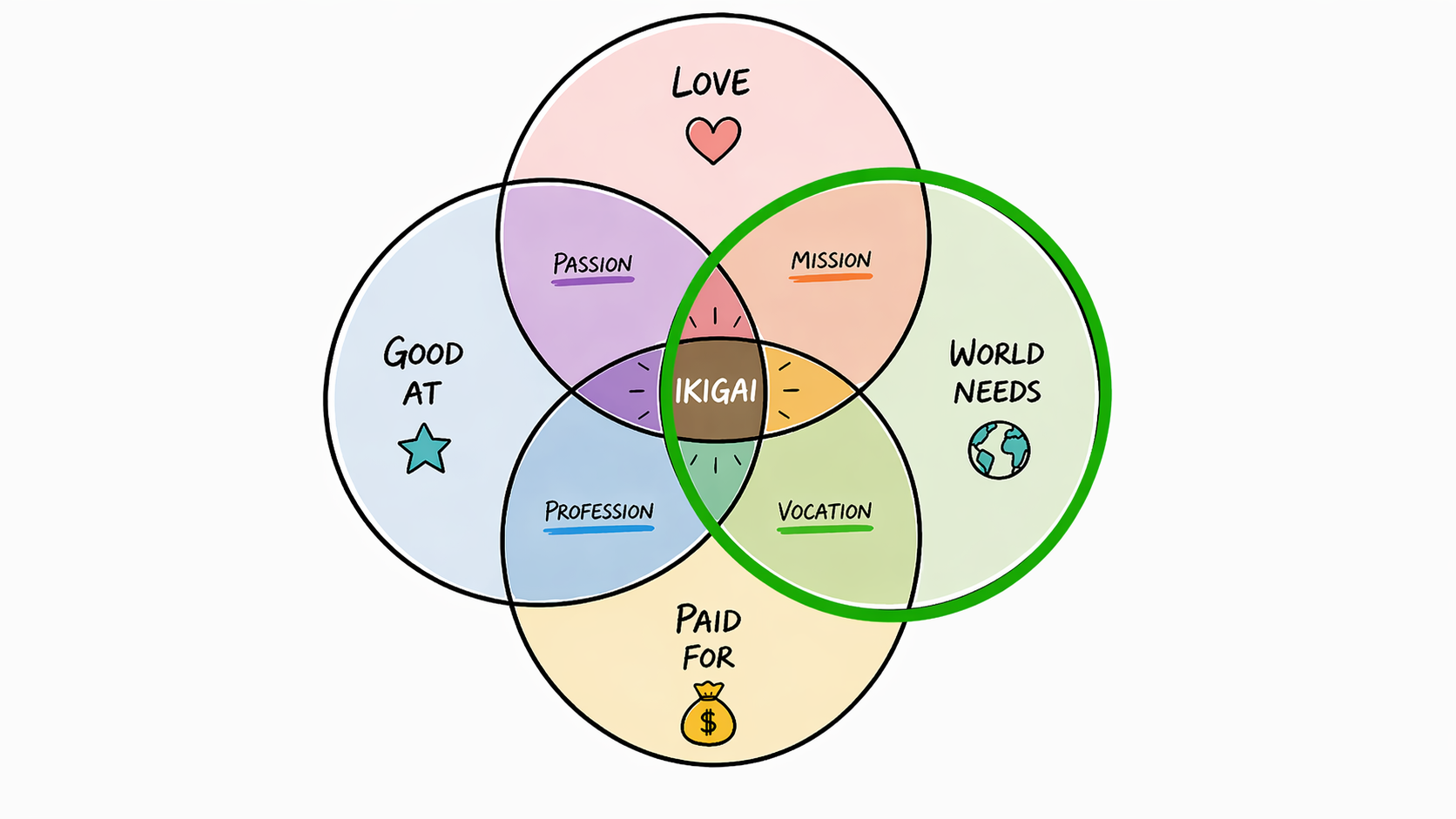
What the world needs has also changed. We already have enough content, enough drafts, and enough automated output. What is in shorter supply is clarity. The world needs people who can make sense of complexity, reduce noise, and help others move in a better direction.
This is where human value becomes very visible. Better decisions matter more than more output. Better conversations matter more than faster production. Better collaboration matters more than isolated efficiency. AI can help create the material, but people still need to decide what is worth keeping, shaping, and sharing.
What you can be paid for
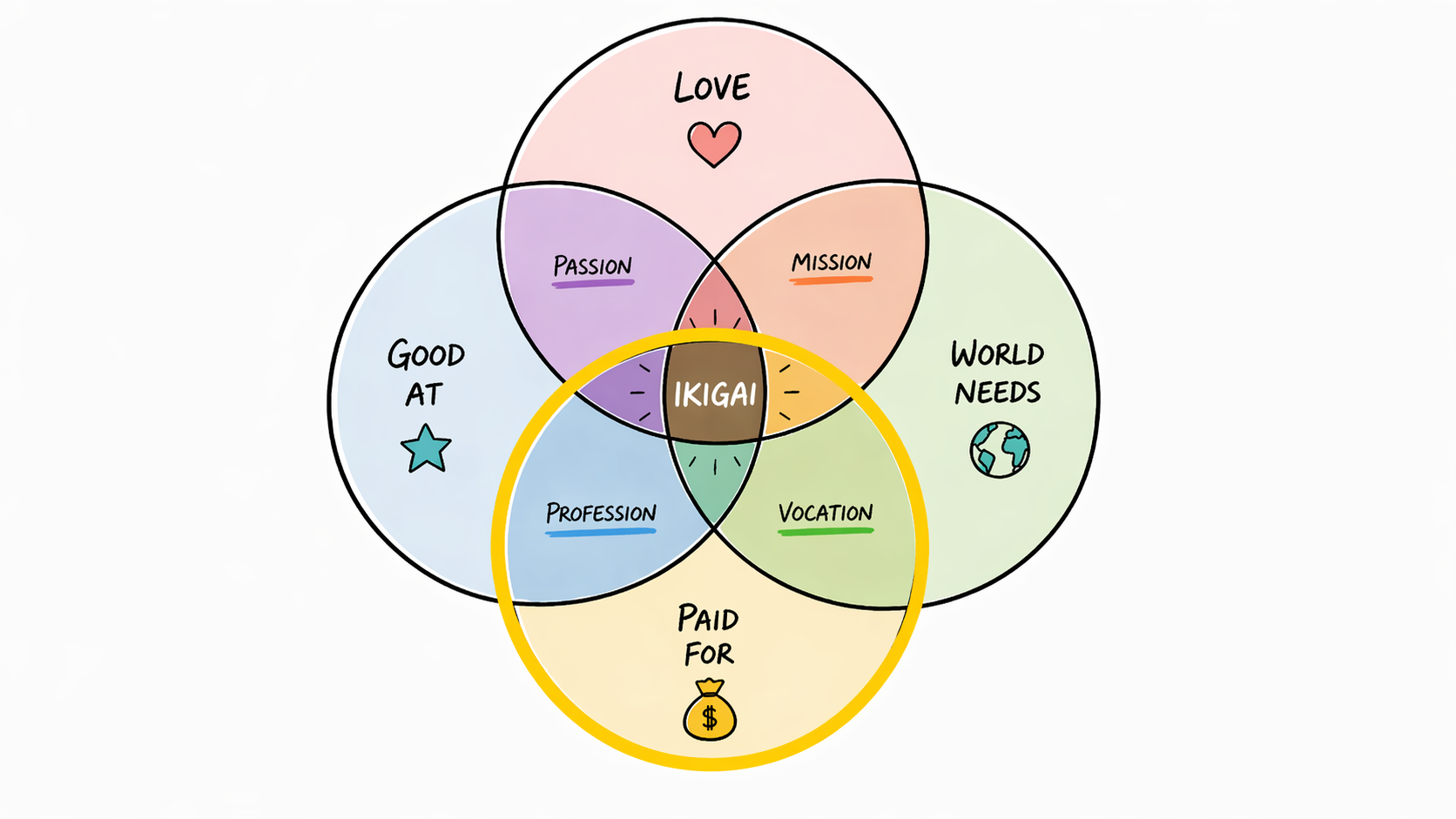
What you can be paid for is shifting from visible output to real outcomes. Documents, boards, slides, and even code are easier to generate than before, so the market is slowly rewarding something deeper. It is not just the thing you make, but the value that thing creates. That changes the conversation around work.
This is why SEA matters so much. Strategy helps you choose the right problem, empathy helps you work with the right people, and adaptability helps you move through uncertainty. Those capabilities create outcomes that matter, and outcomes are what organisations increasingly care about. In the AI era, that is where your professional worth becomes clearer.
A New Ikigai for the AI Era
AI is not making Ikigai obsolete. It is forcing us to redefine it.
The heavy lifting is increasingly automated. What remains, and becomes even more valuable, is the human ability to set direction, understand people, and adapt with clarity.
In other words, AI may change what you do. But SEA helps you remember why you are doing what you are doing.
You can find the worksheet on the Resources page.
Watch the video: Ikigai in the Age of AI